


Veterans travel to Mexico for ibogaine treatment primarily because it is the closest country where treatment is legally accessible, as ibogaine remains Schedule I illegal in the United States despite growing evidence for PTSD and TBI effectiveness. Mexico's unregulated status allows medically supervised clinics in Baja California and Cancun to operate openly, with organizations like VETS and Heroic Hearts providing grants covering treatment costs and vetting facilities for safety standards. Stanford University's 2024 study validated veteran experiences showing 88% PTSD reduction, 87% depression reduction, and 81% anxiety reduction, creating sophisticated support network facilitating these trips for treatment-resistant conditions.
Traditional U.S. healthcare has failed many veterans suffering from treatment-resistant PTSD and Traumatic Brain Injury (TBI). Standard treatments including SSRIs and talk therapy often fail to address TBI, contributing to the suicide crisis with approximately 17-22 veterans dying by suicide daily.
Ibogaine treatment in Mexico offers a neurological reset that conventional medications cannot achieve. The legal gray zone in Mexico has allowed a network of medically supervised clinics to flourish just across the border, specifically catering to U.S. veterans seeking relief from invisible wounds of war. Understanding why this medical tourism trend has grown helps veterans and their families make informed decisions about pursuing this promising treatment option.
Key Takeaways
- Legal accessibility drives veteran medical tourism as ibogaine remains Schedule I illegal in the United States with no accepted medical use despite evidence, while Mexico's unregulated status allows clinics in Baja California and Cancun to operate openly without prosecution fears.
- Stanford University 2024 study validated veteran experiences tracking 30 Special Operations veterans receiving Mexico treatment showing 88% PTSD symptom reduction, 87% depression reduction, 81% anxiety reduction, and cognitive improvements that traditional medications never achieved.
- VETS and Heroic Hearts Project provide sophisticated support network offering Foundational Healing Grants covering treatment costs, strictly vetting Mexican clinics for safety requiring ACLS certification and onsite doctors, and steering veterans away from dangerous underground providers.
- Geographic proximity and logistics make Mexico accessible through short drives from San Diego or flights to Cancun, with English-speaking medical tourism clinics often staffed by former U.S. military personnel acting as integration coaches familiar with veteran experiences.
- Combo protocol combining ibogaine flood dose resetting brain neurochemistry treating TBI and depression, followed by 5-MeO-DMT doses helping seal experience with positive spiritual outlook, creates comprehensive approach impossible to access legally in United States.
- Treatment-resistant conditions including blast-related TBI, complex PTSD from combat trauma, and suicide ideation respond to ibogaine when conventional VA treatments fail, offering hope for veterans exhausting standard care options without relief from debilitating symptoms.
The Legal Firewall Forcing Veterans Abroad
The fundamental reason veterans travel to Mexico is legal prohibition preventing access to potentially life-saving treatment in their home country despite military service sacrifices.
United States Schedule I Classification
Ibogaine is classified as Schedule I controlled substance in the United States, placing it in the same category as heroin and LSD. This classification legally declares that ibogaine has "no accepted medical use" and "high potential for abuse" despite growing clinical evidence contradicting these assertions.
Schedule I classification consequences:
- Federal crime: Possession or administration triggers criminal prosecution
- No prescriptions: Doctors cannot legally prescribe or administer
- Research restrictions: Heavy regulatory barriers limiting scientific investigation
- VA exclusion: Department of Veterans Affairs cannot offer or fund treatment
- Clinical trials: Extremely difficult to obtain approval despite veteran demand
The classification means veterans suffering from treatment-resistant PTSD and TBI cannot access ibogaine through any legal U.S. channel. Doctors who might want to offer this treatment face criminal prosecution and medical license revocation if they attempt to provide it.
Mexico's Unregulated Legal Status
Mexico has no specific laws prohibiting ibogaine possession or administration, creating legal gray zone where treatment can occur without prosecution risk. This unregulated status has allowed clinic network to develop specifically serving U.S. veterans and other patients.
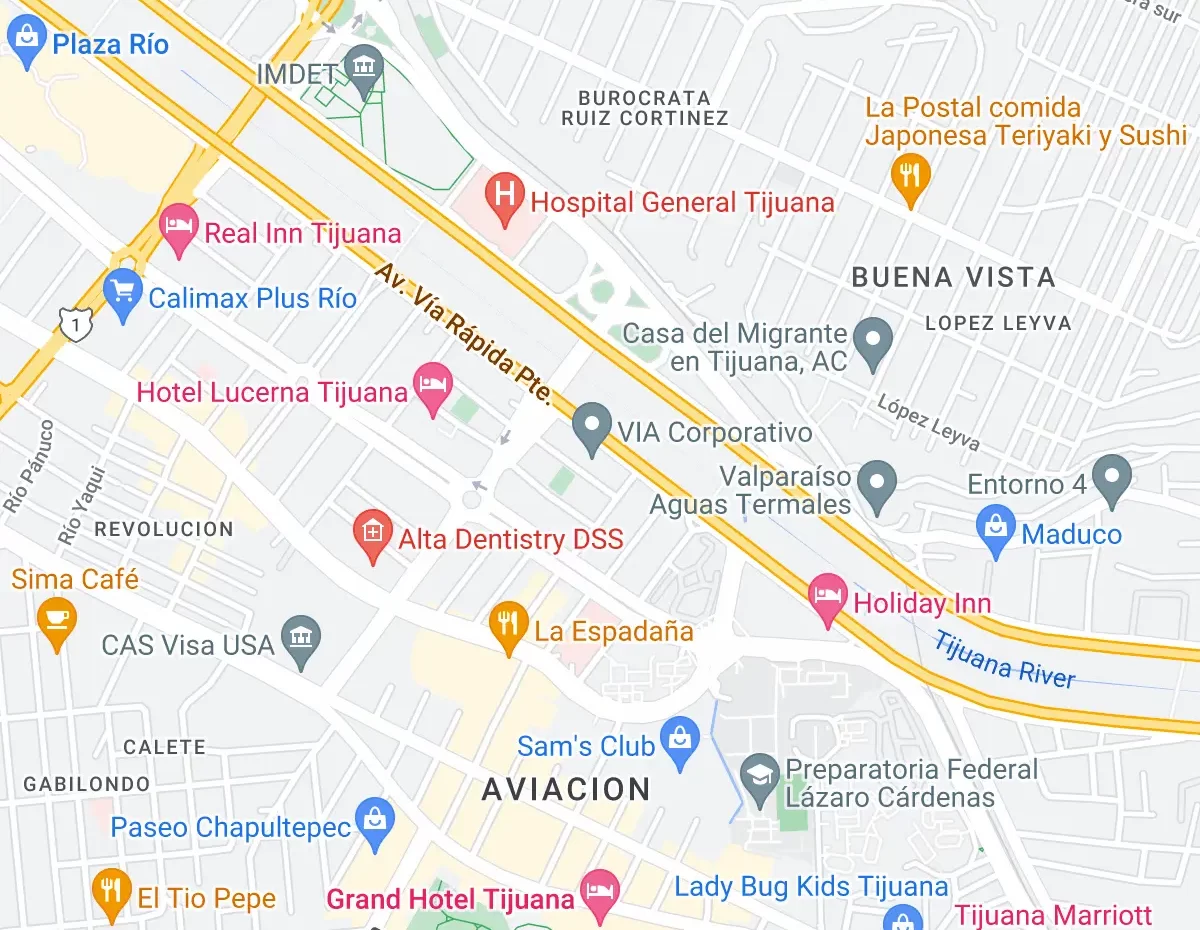
Clinics in Baja California (Tijuana, Rosarito, Ensenada) and Cancun operate openly, legally importing medication, hiring qualified medical staff including anesthesiologists and nurses, and administering treatment in hospital-like settings with comprehensive safety protocols. The lack of prohibition enables facilities to maintain proper medical standards while serving patients who cannot access treatment in prohibition countries.
The contrast between U.S. criminalization and Mexican tolerance creates the "legal firewall" forcing veterans to cross international borders for treatment that research increasingly validates as safe and effective under proper medical supervision.
Treatment Efficacy for Invisible Wounds
Veterans travel to Mexico because ibogaine addresses conditions that conventional U.S. healthcare fails to treat effectively, particularly the combination of PTSD and TBI common among combat veterans.
The Failure of Standard VA Care
Many veterans describe exhausting every treatment option offered by the VA system without achieving meaningful symptom relief. Standard treatments including selective serotonin reuptake inhibitors (SSRIs), cognitive behavioral therapy, and exposure therapy often fail to address traumatic brain injury caused by blast exposures during combat.
Limitations of conventional treatments: The psychological focus of PTSD treatments cannot address physical brain damage from TBI. Veterans experience persistent cognitive dysfunction, emotional dysregulation, chronic pain, and suicidal ideation despite compliance with prescribed treatments. The frustration of treatment failure contributes to the suicide crisis affecting veteran community.
Roughly 17-22 veterans die by suicide daily according to VA statistics. Many of these veterans sought help through conventional channels without finding relief, leading to hopelessness and desperation. The treatment failure creates urgency driving veterans to seek alternative approaches outside traditional medical systems.
The Neurological Reset Phenomenon
Veterans describe ibogaine as providing "neurological reset" that conventional medications cannot achieve. The treatment appears to address both psychological trauma and physical brain damage simultaneously through mechanisms not fully understood but increasingly documented in research.
Landmark Stanford University study published in January 2024 tracked 30 Special Operations veterans who traveled to Mexico for ibogaine for PTSD treatment. The results validated what veterans had been reporting anecdotally for years, providing scientific backing for their experiences.
Stanford study outcomes:
- 88% reduction in PTSD symptoms measured by standardized assessments
- 87% reduction in depression symptoms showing dramatic mood improvement
- 81% reduction in anxiety symptoms decreasing hypervigilance and fear responses
- Cognitive improvements in memory, focus, and executive function
- Disability ratings improved from moderate to minimal or none
- Effects sustained at one-month follow-up showing durability
These results far exceed anything achieved with conventional treatments, explaining why veterans continue traveling to Mexico despite legal risks, financial costs, and logistical challenges. When facing continued suffering versus potential healing through ibogaine, many veterans choose the latter.
Treatment Approach | PTSD Reduction | Depression Reduction | Accessibility |
SSRIs (Standard VA) | 20-30% symptom reduction | Modest improvement | Widely available in US |
CBT/Exposure Therapy | 30-40% symptom reduction | Variable | Requires specialized providers |
Ibogaine (Mexico) | 88% symptom reduction | 87% symptom reduction | Must travel internationally |
The VETS Support Network and Funding
Veterans rarely travel to Mexico alone or pay entirely out of pocket. A sophisticated support network has developed facilitating these trips while ensuring safety and quality standards.
VETS Organization Structure
VETS (Veterans Exploring Treatment Solutions) is a nonprofit organization founded by Navy SEAL families who watched their loved ones suffer from treatment-resistant PTSD and TBI. The organization provides comprehensive support beyond just funding.
Foundational Healing Grants cover treatment costs for qualified veterans who cannot afford the $7,000-$15,000 typical treatment price. The grants remove financial barriers allowing access based on medical need rather than ability to pay.
VETS program components:
- Financial assistance: Partial or full treatment cost coverage
- Clinic vetting: Strict safety standards verification
- Medical coordination: Helping with pre-screening and preparation
- Integration support: Post-treatment psychological assistance
- Community building: Connecting veterans who underwent treatment
- Research facilitation: Enabling clinical studies documenting outcomes
The organization maintains rigorous standards for clinics they work with, requiring ACLS certification for medical staff, continuous cardiac monitoring equipment, comprehensive pre-screening protocols, and emergency response capabilities. This vetting process protects veterans from dangerous underground providers lacking proper safety infrastructure.
Heroic Hearts Project Partnership
Heroic Hearts Project represents another organization connecting veterans with reputable psychedelic programs including ibogaine treatment. This nonprofit focuses specifically on veteran mental health, understanding unique challenges of military trauma.
The organization provides placement assistance matching veterans with appropriate facilities, education about treatment options and expectations, financial support or fundraising guidance, and ongoing community connection supporting recovery journey. Working collaboratively with VETS and other organizations, Heroic Hearts Project has helped hundreds of veterans access treatment.
Safety Through Organization Oversight
The presence of these organizations fundamentally changed veteran access to ibogaine treatment. Before VETS and similar groups, veterans sought treatment through unvetted facilities with inconsistent safety standards and outcomes.
Now, veterans benefit from organizational due diligence ensuring facilities meet medical standards, transparent pricing and treatment protocols, appropriate pre-screening identifying contraindications, and quality post-treatment support enhancing long-term outcomes. This infrastructure makes Mexico travel safer and more effective than independent facility search.
The Combination Protocol Approach
In Mexico, veterans often receive specific protocol combining ibogaine with 5-MeO-DMT that is impossible to access legally in the United States. This combination addresses multiple aspects of trauma and healing.
Ibogaine Flood Dose for Neurological Reset
The initial treatment involves "flood dose" of ibogaine, typically administered on Day 1 of the program. This high-dose experience lasting 24-36 hours interrupts addiction pathways, resets brain neurochemistry, addresses TBI-related dysfunction, and facilitates deep psychological processing.
The flood dose produces intense visionary experience with autobiographical memory recall, allowing veterans to process traumatic events with new perspective. The neurological effects appear to restore brain function damaged by blast exposures and chronic stress.
Veterans report the ibogaine experience as physically and emotionally challenging but profoundly therapeutic. The medicine brings suppressed trauma to consciousness while simultaneously providing neurological healing that makes processing possible without overwhelming re-traumatization.
5-MeO-DMT Integration Experience
Days 3-4 after ibogaine flood dose, many protocols include 5-MeO-DMT (derived from Bufo alvarius toad venom). This brief but powerful psychedelic experience lasts 15-30 minutes providing different therapeutic effects than ibogaine.
5-MeO-DMT benefits for veterans:
- Spiritual perspective: Profound sense of unity and interconnection
- Positive outlook: Counterbalancing ibogaine's challenging content
- Integration support: Helping seal insights from ibogaine experience
- Ego dissolution: Releasing rigid trauma-based identity patterns
- Hope restoration: Renewing sense of possibility and healing
Veterans report that 5-MeO-DMT helps provide positive spiritual framework after the grueling physical and emotional ordeal of ibogaine. The combination creates comprehensive healing addressing both neurological dysfunction and existential dimensions of trauma.
The combo protocol represents sophisticated approach developed through years of clinical experience treating veterans. It cannot be legally replicated in the United States where both substances remain Schedule I prohibited.
Proximity and Logistical Advantages
Beyond legal accessibility and treatment efficacy, practical considerations make Mexico the preferred destination for veteran ibogaine treatment despite other international options.
Geographic Accessibility
Mexico's proximity to the United States eliminates major travel burdens. Veterans from California, Texas, Arizona, and other border states can drive to Tijuana or Rosarito within hours. Those from other regions can fly directly to San Diego, Tijuana, or Cancun with reasonable airfare costs and flight durations.
Travel convenience factors:
- Short flights: 2-5 hours from most U.S. cities to Mexican destinations
- Direct routes: Major airlines serve Tijuana, Cancun, Mexico City
- Ground transportation: Some clinics provide border crossing assistance
- Time zones: Minimal or no jet lag facilitating adjustment
- Familiar environment: North American culture reducing culture shock
The ease of travel means veterans spend less time and energy on logistics, preserving resources for healing. Family members can more easily visit during treatment or recovery periods compared to distant international destinations.
English-Speaking Medical Tourism Infrastructure
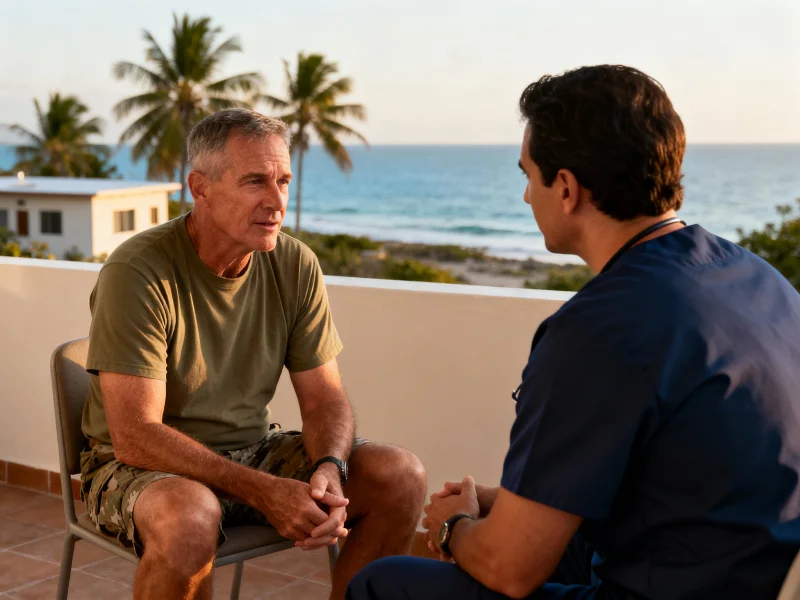
Medical tourism clinics in Mexico specifically cater to English-speaking patients, particularly U.S. veterans. Staff typically includes English-speaking doctors trained in United States or Europe, bilingual nurses and support staff, and former U.S. military personnel acting as integration coaches.
The presence of veteran coaches creates unique therapeutic environment. These individuals understand military culture, combat trauma, and veteran-specific challenges in ways civilian therapists often cannot. They provide peer support and validation alongside professional medical care.
Clinics familiar with veteran needs understand service-connected issues, military terminology and communication styles, common combat trauma patterns, and importance of mission-focused treatment approach. This cultural competency enhances treatment effectiveness and veteran comfort.
Feature | United States | Mexico for Veterans |
Legal Status | Illegal (Schedule I) | Unregulated / Legal to Administer |
Availability | Zero (except rare trials) | On-demand Private Clinics |
Wait Times | Years for trial approval | Weeks for treatment |
Cost Coverage | None (VA excludes) | Grants available (VETS, Heroic Hearts) |
Medical Support | N/A | Full ER/Cardiac monitoring available |
Treatment-Resistant Conditions Driving Demand
Specific conditions affecting veteran population respond to ibogaine when conventional treatments fail, creating strong demand for Mexico access.
Blast-Related Traumatic Brain Injury
Repeated blast exposures from IEDs, mortars, and other explosives cause traumatic brain injuries that conventional treatments cannot adequately address. Veterans experience cognitive dysfunction, emotional dysregulation, chronic headaches, and personality changes that persist despite standard interventions.
Ibogaine appears to address TBI through mechanisms involving neuroplasticity, inflammation reduction, and cellular repair processes. Veterans report improved cognitive function, reduced headache frequency, better emotional control, and restored sense of self after treatment.
Complex Combat PTSD
Combat-related PTSD differs from civilian trauma in intensity, duration, and moral injury components. Veterans carry guilt, shame, and existential wounds alongside fear-based trauma responses. Standard PTSD treatments often fail to address moral injury and spiritual dimensions.
Ibogaine's visionary properties allow processing of moral injuries and traumatic memories with new perspective. The experience facilitates forgiveness of self and others, integration of combat experiences into life narrative, and resolution of existential conflicts preventing healing.
Suicide Ideation and Prevention
Many veterans traveling to Mexico report active suicidal ideation before treatment. Traditional interventions including psychiatric hospitalization, medication trials, and intensive therapy failed to resolve suicidal thoughts.
Veterans and their families view ibogaine as last resort before potential suicide. The dramatic symptom reductions documented in research provide hope where conventional care offered none. Many veterans credit ibogaine treatment with saving their lives after years of suffering.
Conclusion
Veterans travel to Mexico for ibogaine treatment because it is the closest country offering legal access to therapy addressing treatment-resistant PTSD and TBI when conventional VA care fails. Stanford University research validated veteran experiences showing 88% PTSD reduction, 87% depression reduction, and 81% anxiety reduction far exceeding standard treatment outcomes.
Organizations like VETS and Heroic Hearts Project provide grants covering costs and vet facilities for safety, creating sophisticated support network protecting veterans from dangerous providers while removing financial barriers. The combination of legal accessibility, geographic proximity, proven efficacy, organizational support, and specialized combo protocols makes Mexico the primary destination for veterans seeking neurological reset that conventional medicine cannot provide, offering hope for those exhausting all other options.